Showing posts with label Tahiti. Show all posts

Sunday, March 13, 2022

Polynesia, Here I Come!

In less than two weeks, I'll be taking off on a late winter vacation in Polynesia. 


But where exactly is that?
 
Polynesia, a cultural rather than a national or political identity, sprawls across a vast area of the Pacific Ocean, encompassing hundreds of islands and dozens of island communities. The main political entities in Polynesia are Hawaii and American Samoa (USA); French Polynesia and Wallis/Futuna (France); New Zealand, the Cook Islands, and Niue (New Zealand); Easter Island (Chile); Tuvalu, Samoa, and Tonga.

Matters get blurry around the edges of the region, as neighbouring island groups like Fiji and Kiribati may be the home of peoples of Melanesian or Micronesian ancestry, yet share some common linguistic and cultural features with the Polynesians.


How did these diverse cultures become so widely spread across such a vast distance of water? With their sail-driven dugout outrigger canoes, the Polynesians were mighty seafarers. 
 
With no aid from compasses or maps, and only the action of wind, waves, clouds, seabirds, and the eternal stars to guide them, they learned how to cross the trackless oceans again and again. They didn't just explore from island to island; they continued to travel, sending repeat parties of colonists when informed that new land had been found and settled.

The result is that, whichever part of Polynesia you visit, you will encounter a fair degree of familiarity as compared to other Polynesian societies and cultures: familiar words, familiar foods, familiar styles of music and dance, and much more.

So far, in this region, I've visited Fiji, New Zealand, Hawaii, and (in French Polynesia) Tahiti, Huahine, Moorea, Bora Bora, Raiatea, and Rangiroa.
 
Every year, a few cruise ships will sail through the regions of Polynesia, stopping at a number of different islands. This is now the easiest way to get a cross-section view of the entirety of Polynesia (unless you own a private yacht or jet). Other cruise ships do shorter regional trips, like the 10-day cruise around French Polynesia which I took in 2015, starting and ending in Tahiti.
 
Otherwise, travel across Polynesia is mainly via air travel -- and the options for island-hopping are severely limited. This isn't just due to the pandemic. Ever since airliners were developed that could fly nonstop from North America to Australia, the number of planes stopping over in the islands on trans-Pacific flights has dropped to a mere fraction of the flights in earlier years.  Trying to plan an air trip to multiple destinations in Polynesia in an exercise in skill and patience alike.

I'm not trying. Much as I'd love to see more of Polynesia, I'm sticking to just one limited area of Polynesia for my upcoming trip. I'm looking forward to feasting on quantities of fresh fruit and fresh fish, to enjoying sun and leisure...,


 to watching traditional dance and listening to traditional music...,


to admiring brilliantly coloured tropical flowers...,


and to immersing myself in the rugged beauty of the volcanic mountains.


Yes, all the islands in Polynesia are volcanic in origin. Active volcanoes are still part of life here, as Hawaii has experienced for years and Tonga has recently discovered again. 
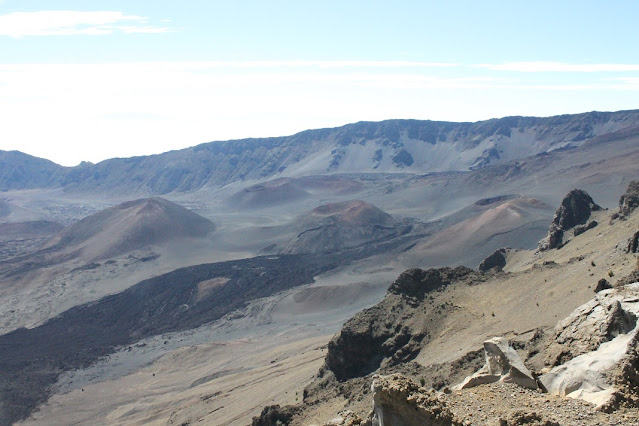
 

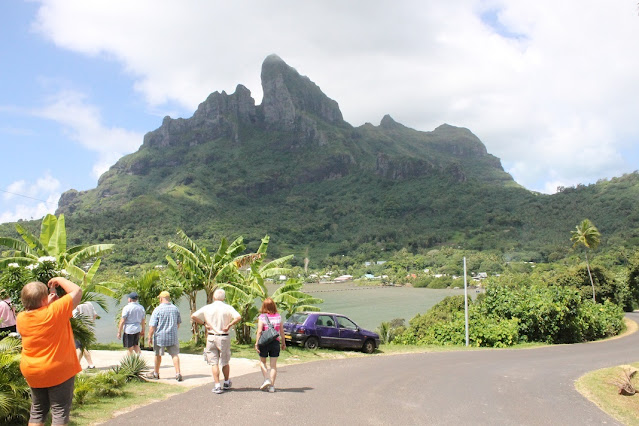
The less recently active volcanic islands (within the last 500 millennia or so) will still have jagged mountain peaks and spires thrusting up here, there, and everywhere. 


The very oldest of all will have eroded down to a flat-topped platform under the ocean with coral reefs growing all around the edges, and sandbar islands (called motus in French Polynesia) forming in a ring within the shelter of the reefs -- and thus, you have the popular image of a Polynesian island composed of nothing but sand, shells, and coconut palms, all caressed by warm, gentle tropical breezes.


Getting to Polynesia from my home in Eastern Canada is a time-consuming exercise. To give you some idea from my past travels: Toronto to Vancouver takes 5 hours, and you're still in Canada. From Vancouver, the nearest corner of Polynesia is Honolulu, 6 hours flying time away. The farthest corner is New Zealand, and Auckland is another 9 hours beyond Honolulu. Tahiti is 6 hours flying time south of Honolulu and Fiji about the same. These are not short hops! You have to cross multiple time zones, and -- in the case of a few of the more westerly Polynesian countries -- you also cross the International Date Line and arrive on a different day from the day you departed.

Oh, which part of Polynesia am I heading for? To be continued....

Note: all pictures in this blog post are taken from previous adventures in one part or another of Polynesia, in 2015 and 2017.

Monday, February 16, 2015

Last Words on the Pacific

Throughout my month-long trip to Hawaii and Tahiti, I was periodically shooting film footage on my new mini-video cam.  I managed to upload just one of those clips into the blog, and it took so long that I decided to do the rest after I got home.  This involved a lot of updating of the various original posts.  Follow the links below and you'll come to the appropriate posts, where you can scroll down to find the video clips now embedded.

To start with: some coastal surf and bodyboard surfing in Tahiti.

At Sea in Polynesia

Next, an amazing clip of a feeding frenzy induced by tossing some dead fish into the water, all filmed from the semi-submersible sightseeing vessel in the atoll of Rangiroa.

Two More Very Different Worlds

Then a look at the shores of the main island of Bora Bora.  As well, on Moorea, the gorgeous views from the Belvidere lookout point halfway up the main mountain.

More Famous Islands

And finally, the view of West Maui mountains from the volcano Haleakala, island of Maui in Hawaii.

In The House of the Sun

I hope all of my faithful readers have enjoyed reading these blogs as much as I have enjoyed writing them.  I'll be back at some future date with more travellers' tales and helpful travel hints.

Friday, February 13, 2015

Inns and Outs

Over the last month of travel, I have stayed in 5 major island resorts and 1 cruise ship!  The hotels have all been rather upmarket places, and I wouldn't necessarily choose to stay in such lavish properties on a regular basis.  But for this trip, I figured I might as well "shoot the works" since I may not pass this way again.

All have been very comfortable, and all have had excellent facilities in relation to their size.

But here's a rundown on the six, in reverse order, starting with the last one.

[6]  Grand Wailea, a Waldorf Astoria Resort (Maui).  I would never, ever have picked this place in the ordinary way of things.  I came here because I could cash in my Hilton Hhonors points for two free nights' stay.  The room I'm in would normally cost about US$400 a night for a view of the parking garage and mountain, so you can imagine the rates for a full ocean-view room.  This place is so enormous and overpowering that it's like staying in a royal palace, complete with huge columns, fancy staircases, artworks everywhere, and miles of stately corridors, whether indoors or outdoors.  Just getting to the front desk to register is like negotiating a laboratory maze -- I wonder what happens if you get lost in the lobby?  Do they refuse to register you?  To get to the bistro down by the water or to the adults-only pool area is a 10-minute brisk walk from my room, not counting the time needed to take two separate elevators.  It's also very easy to get lost here because there is a dire need for more and clearer signs in elevators, and along indoor and outdoor walkways.  With all that, and even with the cachet of the Waldorf Astoria name, I did not find the service here any better than in many other and much cheaper hotels I have stayed in.  I think it's basically a case of "more is less" because this hotel simply seems too big to be able to work efficiently.  Here's an online view of the entire monstrous structure.


[5]  Marriott Waikoloa Beach Resort and Spa (Hawaii -- Big Island).  From my picture below, you can see that this is a lovely property.  It's a much more modest size, and would be a great place to stay except that the service in the food/beverage departments was coming apart at the seams all over the place.  I had six different service glitches in a 3 night stay, including drinks that didn't arrive and a salad that came with several ingredients missing.  Even though the cost was fairly modest compared to some other hotels, I couldn't recommend this one.  High pretensions but fails to deliver the goods.


[4]  Intercontinental Resort Tahiti (2 stays).  This one wins hands down for most attractive property, with smallish buildings surrounded by beautiful gardens and plenty of ocean frontage.  Since this is Tahiti, a very rocky island, there isn't much beach.  The sand-floored pool goes a long way to make up for that.  Service people are very friendly, but not all are fluent in English (this is French Polynesia, after all).  The over-water bungalow was comfortable, but the panoramic room on the 3rd floor even more so.  The restaurant features a good choice of Tahitian foods alongside more conventionally European dishes.  Most relaxing resort all around.


[3]  Ocean Princess, Princess Cruise Lines.  An absolutely delightful, laid-back ship with a distinctly easy-going feeling to it.  As I already posted, the decor gives a strong backwards glance to the Golden Age of transatlantic steamship travel, as does the service.  But what really makes this such a great ship is the ability, among a small complement of passengers and crew, to really get to meet and know other people during the cruise.  You can imagine my chagrin when I learned that Princess has sold the ship to another operator!  Grrrr.  However, I will be taking another cruise on Ocean Princess in December, an 18-day transatlantic voyage from Rome to Miami with various stops on the way.  it's the ship's penultimate voyage under the Princess banner.


[2]  Marriott Kauai Resort, Kalapaki, Kauai.  This one had a good combination of features and was large but not too large.  The best features of this resort were the huge pool, and the attractive beach with gentle surf.  Of all these locations, this is the only one I would judge safe for small children being in the ocean with their parents.  This was the place for outstanding service quality, in all departments, and the one out of all my hotel stays that I would want to visit again.


[1]  Hilton Hawaiian Village, Waikiki, Honolulu, Oahu.  This resort in the form of a city of hotels is of course even larger than any 2 of the others put together, but still easy to get around because of the effective layout of the property.  I could reach the pool, the beach, or any of the restaurants in 5 minutes walk from my room, not counting elevator time.  Also, here, there is the advantage of off-property eateries and convenience stores close by, for cheaper alternatives to hotel meals and drinks.  Of all the properties I visited, this one generally offered the fewest options for meals -- it had the smallest and least varied breakfast buffet, and the less-upscale of the dinner restaurants had a pretty limited menu.  Inevitably, the sheer size of the place means bottlenecks at restaurants, pools, and bars  The front desk and concierge services always seem to have line-ups.


If/when I do return to Hawaii, it will likely be to the Kauai Marriott resort.


Tuesday, February 10, 2015

Getting From There to Here

In the lobby of the Intercontinental Resort in Tahiti, there's a notice that encourages you to settle your account ahead of time, even the night before leaving, because the resort is close to the airport and they have people arriving and leaving at all hours of the day and night.  They aren't joking.

The distance from Tahiti to all other major landmasses is the villain.  International flights basically are forced to arrive and depart either very early in the morning or last thing at night.  Inter-island flights come and go throughout the day, but the big long-range flights are almost all before 9:00 am or after 10:00 pm.

This further means that if you have a late flight you have a lot of time to kill.  The Intercontinental smartly provides a group of free "transit rooms" which offer you a chance to shower up and change before heading to the airport for that late, late flight.  So I used one, after a whole day of sun and pool, and was nicely cooled off and ready to go when my airport transfer picked me up at 9:30 pm.

Then I got to the airport.

Getting back to Hawaii from Tahiti was an experience of extremes, to put it mildly.  Tahiti's Faa'a International Airport is not air-conditioned.  By the time I finished heaving bags to the check-in counter, lining up for passport control, and removing everything that has to be removed for security, I was left with a sweat that just wouldn't quit.  The crowning insult came when we were allowed to board and found it was actually cooler outside the terminal than inside (this was a new experience for me in Tahiti).  By this time I had successfully transitioned from "First Class Passenger" to "Passenger requiring extra time to board" because the arthritis in my right knee had flared up so badly.  The long flight of stairs to the aircraft door with 2 carry-ons suddenly looked remarkably like Mt. Everest after global warming finishes removing the snowcap. 

But then....  As soon as I walked through the door of the plane I was back in the Arctic.  I've never stopped sweating so quickly in my life.  I figured the temperature would moderate within 10--15 minutes after the cabin door was closed.  But no.  By 10 minutes after take-off I had joined my fellow first-class passengers and wrapped myself in my blankie.  The flight at least went right on time at 11:30 pm, and arrived right on time at 5:15 am.  We were given a "bedtime snack" soon after take-off which would have been a good-sized meal at dinner time.  I never would have believed that I would ENJOY eating hot pumpkin soup while deep in the tropics, but sure enough.  And then I went out like a light and stayed that way for 3 hours, which is a record for me on a plane flight.  And the cabin was still an icebox for the entire flight!

Customs clearance in Honolulu was reasonably quick and trouble free but the knee flared up again during the walk to the connecting terminal for inter-island flights.  Haven't had so much trouble with it in years.  That left me with still over 2 hours to wait for the short 40-minute flight to Kona Airport on the big island of Hawaii.  

But eventually I arrived in Kona, and got reminded of something I knew but had forgotten.  The Kona airport is all outdoors, except for the shops and offices.  It's like walking through an outdoor shopping mall, as you make your way between buildings to or from the street side of the complex.

There's a very good reason why this is practical, and I'll be covering that in the next post.

Thursday, January 29, 2015

At Sea in Polynesia

The centrepiece of this whole expedition is the 10-day cruise around the islands of French Polynesia on Princess Cruise Lines’ Ocean Princess.  Alone among all the “big players” in the cruise industry, Princess has had the smarts to keep a foot in the “small ship” category.  Ocean Princess and her identical sister ship Pacific Princess weigh in at a tiny 30,277 tons and carry less than 700 passengers each – a startling contrast to the floating apartment towers which all the major lines are busily building.

It’s ironic that barely a century ago a 30,000 ton ship would be one of the three or four biggest vessels in the entire world.  Ocean Princess is nearly the same tonnage as the Cunard liners Lusitania and Mauritania.  It’s exactly 100 years ago this spring that the Lusitania was torpedoed and sunk off the coast of Ireland, while the 31,938-ton Mauretania continued to give distinguished service for another 20 years.  But check out these pictures to see just how different two ships of similar tonnage can appear:


The obvious visual difference in the two ships is in their length.  Mauretania was 790 feet long while Ocean Princess is nearly 200 feet shorter at 592 feet -- but stands three decks taller!  The other key difference which shows just how far life at sea has evolved in a century is the fact that the old Mauretania was designed to carry 2165 passengers at a time, versus Ocean Princess with a capacity of 672.  The difference is that today's cruise ship offers every passenger the equivalent of what would have been a first-class ticket in the early 1900s -- or pretty close to it.

I’ve gone to the trouble of comparing this cruise ship to an ocean liner from a century ago because the interior designers of Ocean Princess and her sister Pacific Princess have come up with a look for the public spaces which are obviously intended to evoke that bygone age of luxury without slavishly imitating it.  Dark wood panellings abound.  There are carved decorations in the ceilings.  Wall lamps make a nod in the direction of the old, as does the furniture.  Nothing is positively antique, but everything whispers little reminders of an age of bygone luxury and leisure.  


The same is true of the customer service people.  When I ordered a pre-dinner teeny martooni, in the Casino Bar, it was not the bartender who did the honours.  Rather, the waiter brought the shaker over to the table, shook it up with a flair and poured it elegantly right in front of me. 


We’ve actually started the cruise by sailing – nowhere.  After boarding on January 27 we remained firmly tied to the dock in the small but busy harbour of Papeete until 5:00 pm on the 28th.  To me this was the golden opportunity to take in a tour of some of the highlights of Tahiti.  It meant that I could just concentrate on relaxing during the three nights I was at the resort.

The Tahiti of today as seen in and around Papeete is certainly not the tropical paradise depicted so evocatively in the paintings of Paul Gauguin.  It’s the most heavily developed island in French Polynesia and no wonder.  Papeete is the capital of the entire territory, the seat of the government, the seat of the Roman Catholic bishop, the location of many cultural and educational facilities, the chief port of entry for goods and the only port of entry for air travellers (at the nearby Faa’a International Airport).  


It’s a busy, bustling place, but not always beautiful by any means.  Like any major city of 50,000 or so people, it has it’s stark industrial areas, it’s uglier buildings, it’s dirtier and seamier neighbourhoods.  That – as the saying goes – is life, but it amuses me that people who wouldn’t even blink at such things in their own home town get furiously affronted and burst into torrents of indignant imprecation when they encounter them here!
 
Having said all of that, the waterfront of Papeete is very lovely.  The main boulevard is lined with trees and gardens, there’s a sizable park, and some of the city’s more attractive buildings right behind it.  And we have a grandstand view of it all from the port side of the ship, as it sits at the dock.  So naturally my balcony stateroom is on the starboard side, with a view of the working area of the harbour.  The Terevau in the photograph is one of the fast ferries to Moorea.


As our tour bus fought clear of the traffic in Papeete and slowly made its way east along the coastal road, the old traditional image of Tahiti was more and more evident.  The lush tropical vegetation, the volcanic rock, waterfalls, and pounding surf all looked exactly right. 


Surfing, we were informed, was traditionally an activity reserved for royalty, and only the chieftains were allowed the privilege of standing up on the surfboard.  Well, times have certainly changed and there are plenty of people out surfing now!  Here are a couple of video clips of some spectacular surf on the rocks of Tahiti's north shore, and some Tahitians enjoying some bodyboard surfing.


The one thing that hasn’t changed at all is the beauty of the Tahitian people.  Behind the modern clothes you can still clearly see the grace in movement and the warmth of the smiles that so captivated Gauguin.  And when they adopt traditional dress, it’s easy to ignore the trappings of the modern world and – just for a moment – be swept back in time to the Tahiti of long ago.  I hope that never changes.

Sunday, January 25, 2015

Farther Into the South Pacific

So that's it for Hawaii, for now.  I'll be visiting two more of the Hawaiian Islands on my return home, but for now I am off to Tahiti, 6 more hours of flying time south and a bit east.

If you want to island-hop in the Pacific like this, the scarcity of flights becomes a major handicap.  Newer aircraft have made it feasible to fly nonstop between any two of North/South America, Asia or Australia/New Zealand.  Result: the days when all flights had to island hop just to get from one side of the Pacific to another are over and done.  There's just one airline serving Hawaii-Tahiti, and that's Hawaiian Airlines.  The flight only operates once a week, on Saturdays.

Since I bought my flight tickets at different times, I've had to make use of another handy traveller's trick.  If you have 2 different tickets but both are issued by the same airline (as I have), simply explain that to a check-in agent and you can probably get your bags checked through to your final destination, as I did.  This won't normally work if two different airlines are involved, unless they both belong to the same global alliance (such as Star Alliance or OneWorld) or have some other form of cross-ticketing agreement.  The result is that I was able to "merge" the two tickets and check my bags through from Kauai to Tahiti without having to reclaim and recheck them in Honolulu.

In passing, though, I want to put in a good word for Hawaiian Airlines.  Their service is exemplary.  All their staff that I have met have got in full measure the genuinely warm and welcoming manner so typical of all the Polynesians I have met.  Even on their little 20-minute inter-island shuttle flights they have a drink for everyone, which is a major feat of coordination that their flight attendants simply perform day in and day out as a matter of course.  I love travelling with Hawaiian!

This became especially important yesterday.  There was a serious mass of turbulent, stormy weather right smack along the flight path, and we had to take a long roundabout detour.  In fact, for most of the flight we were following a direct flight path from Hawaii towards Samoa, which is three hours flying time west of Tahiti!  Only when we got right down to the proper latitude did we finally turn east to head for our destination.  The flight took about 90 minutes longer than usual, but the crew did a very good job of explaining why and of looking after us throughout the journey.

Flying to Tahiti takes you deep into the tropics, and south of the Equator.  Here the traditional four seasons of the temperate zone (spring, summer, fall and winter) are meaningless.  In tropical climates you usually get just two seasons:  Wet and Dry.  Tahiti is no exception.  Sadly, the wet season coincides with our North American winter.  The weather is hot, humid, and rain can be expected at almost any time on almost any day.  You pays your money and you takes your chances!

I've already spoken with several people who had no idea of this in advance.  The Tahitian official tourist website stresses the sunniness of Tahiti, and makes much of the well over 300 days a year when the sun shines.  Well, it's now 4:15 pm Tahiti time, and for about 10 minutes this morning the sun was "sort of" visible, half veiled by the clouds.  I suspect they will count that as a "sunny day".  The moral of the story is: plan any trip to the tropical Pacific islands for somewhere from March or April to September or October.  I put it that way because I encountered the same phenomenon in Fiji in January of 1994.  At least it dried up this afternoon for a couple of hours, long enough for me to have a nice long swim in the Lotus pool, which is a sand-floored infinity pool and is pleasantly cool and refreshing.

I decided to "shoot the works" and reserve an over-water bungalow.  The one thing this definitely gives is plenty of peace and quiet.  Fortunately it's both a good size and comfortable, as I expect to be spending a fair bit of time in it!

At any rate, to satisfy your curiosity, I'm going to put in a couple of pictures.  You'll have no trouble telling which ones are mine and which are borrowed from the hotel website.  First, an interior shot of the bungalow:


The view over the outside balcony and swimming platform, towards Moorea (which was completely hidden in cloud this morning):


The other view, along the resort's shoreline:


And, later in the day, the moment when a sizable chunk of the island of Moorea finally became visible for a few moments:


Now, here's what all of that is "officially" supposed to look like:


And, for good measure, an aerial view of the whole resort, considered by most travel sites to be the best luxury property in Tahiti:


My bungalow is at the very end of the projecting string of bungalows in the distance.  It's about a seven minute walk to the main building with its restaurant by the large pool in the foreground, so once again I am getting my exercise!  The large green water next to the pool is the Lagoonarium, an enclosed lagoon connected to the sea and stocked with a fabulous assortment of tropical fish, minus the predatory and dangerous species.  It's popular for snorkeling, since the main lagoon of Tahiti (the surrounding ocean water, inside the reefs) isn't as vividly colourful in its sea life as those on some of the other Polynesian islands.

The beautiful stretch of ocean between Tahiti and Moorea is evocatively called "The Sea of the Moon", and I'd love to see it with the moonlight sparkling on the waters.  It definitely isn't happening today, though!

The biggest single thing you need to know if planning a trip to French Polynesia is: bring lots of money and have a huge credit limit on your card!  If you study the map, you'll soon see why.  Tahiti is about as far as it is possible to get from any continental landmass, and the vast majority of products you will use and consume during your stay have to be shipped over those immense distances, whether by sea or in some cases by air.  Just as an example: the hotel restaurant puts those little mini jars of Dickinson's ketchup on the table.  It's produced in California.  Consider that the ketchup has travelled about 4000 miles/6400 kilometres to get added to your lunch, and you can begin to see why it's pricey to eat here.

But let's be fair and compare apples to apples.  Look at the prices in any Intercontinental hotel restaurant anywhere in the world,  This is an upscale premium chain, and the prices will always reflect that fact.  In any case, this is a beautiful property and would be a fine place to spend some time if only the damn sun would come out and keep shining for a while!